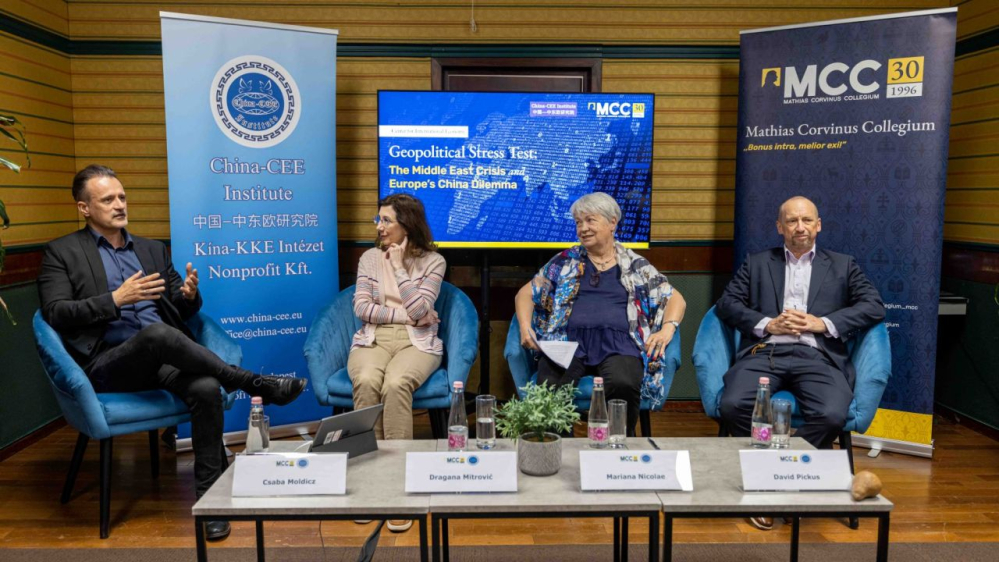
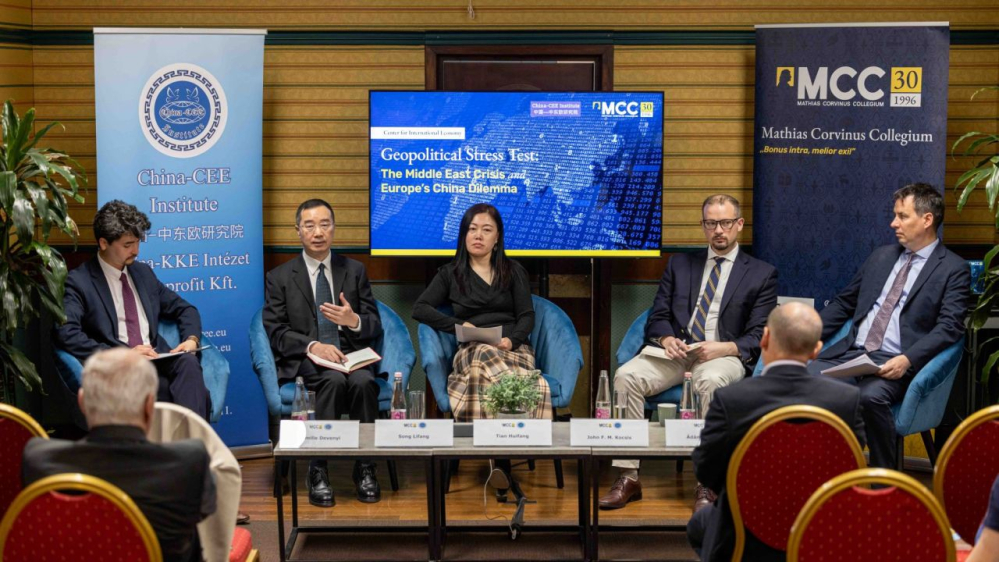
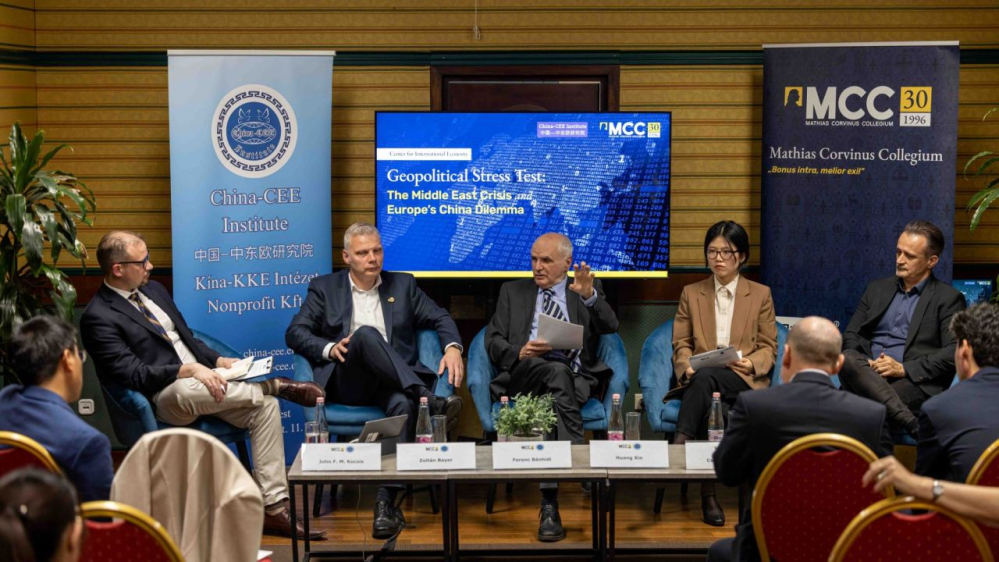
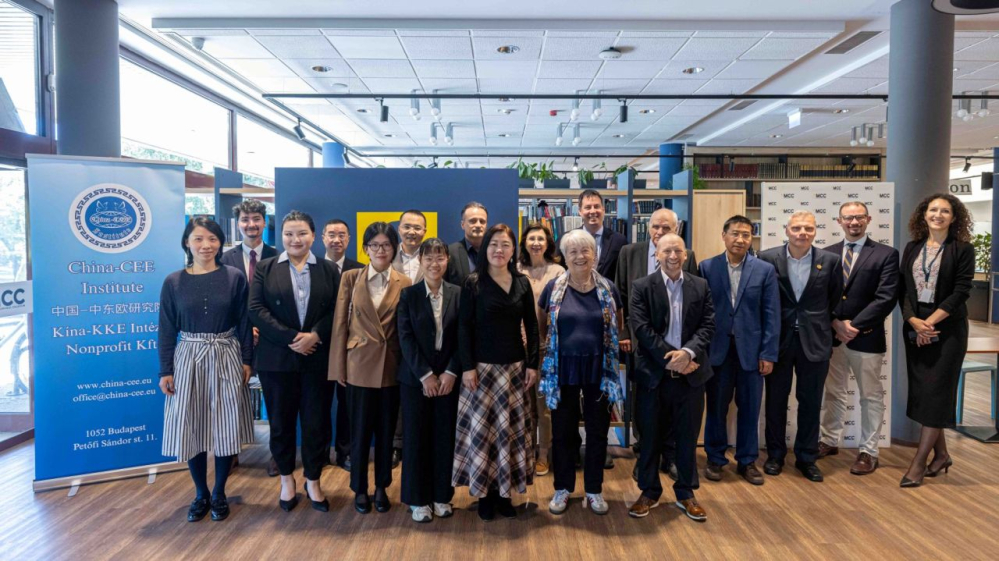
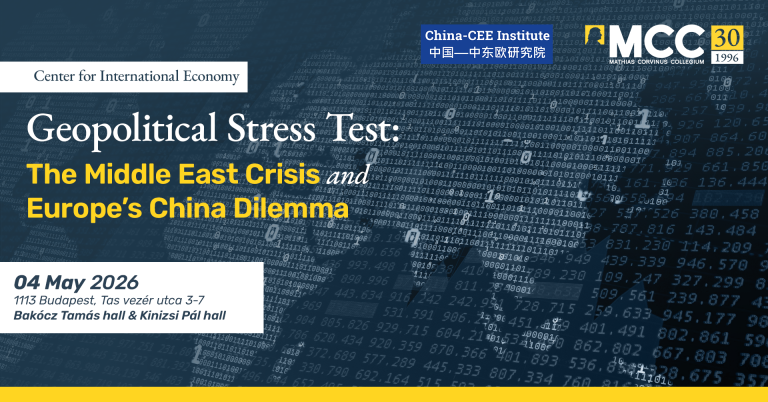
On May 4, 2026, the international conference titled Geopolitical Stress Test: The Middle East Crisis and Europe’s China Dilemma took place at the Budapest headquarters of the Mathias Corvinus Collegium. The Center for International Economy and the China–CEE Institute jointly organized the event. The event aimed to provide a comprehensive overview of the global geopolitical and economic consequences of escalating conflict in the Middle East, as well as its impact on the maneuvering room of Europe and China in a rapidly changing international environment. At the opening of the conference, László Krisztián, the MCC's Director of International Relations, and Tian Huifang, the China–CEE Institute's Research Director, welcomed the participants. Their opening remarks emphasized the central insight that the Middle East crisis is a systemic shock affecting energy flows, trade routes, and financial markets, not merely a regional conflict.
During the panel discussions, participants sought to determine whether the current situation should be interpreted as a manageable geopolitical crisis or a sign of a deeper systemic realignment. Presentations highlighted Europe's significant vulnerability, primarily due to energy dependence, fragile supply chains, and limited strategic autonomy.
Overall, the conference made it clear that geopolitical, economic, and technological processes are closely intertwined in the current international system. The event provided an important forum for researchers and experts to discuss how Europe can respond to growing global uncertainty and the potential role of China in the emerging balance of power.
 May 4, 2026 at 9:00 AM - May 4, 2026 at 3:30 PM